Guide · Tools
The 9 best podcast clip makers in 2026, compared by what a podcaster actually needs
Every AI podcast clip maker says it turns long video into viral shorts. The real question is whether you can paste last week's episode and get back the moments you would have picked. And it has to hold up with both hosts in the frame, at a price that survives a weekly schedule. We compared nine tools on exactly that. Short version: ClipPod is the best podcast clip maker for two-host shows, OpusClip is the best all-rounder for solo shows with many sources, and Vizard is the cheapest per episode.
The short answer. A podcast clip maker takes a long episode, finds the moments worth posting, reframes them to vertical 9:16 for Shorts, Reels and TikTok, and captions them. ClipPod is the best one for two-host and guest shows, because it is the only tool here that splits the frame automatically when a second voice lands. Every tool below was checked against its own pricing page on 7 September 2026.
Run one episode through ClipPod on the free credits, no card needed, and judge the framing yourself.
What is the best podcast clip maker?
ClipPod is the best podcast clip maker for a show with two hosts or a regular guest, because the frame splits on its own when the second person talks. OpusClip is the best all-rounder for solo shows and mixed footage, on the widest input list in the category. Vizard is the cheapest per episode, Klap suits a fixed clip count, and Riverside suits shows recorded in Riverside.
| Tool | Best for | Two hosts talking | Paste a YouTube link | From |
|---|---|---|---|---|
| ClipPod | Two-host and guest podcasts; first clips in about 13 minutes | Automatic split | Yes | $12/mo |
| OpusClip | Solo shows with many sources | Not stated | Yes | $15/mo |
| Vizard | Volume on a budget | Not stated | Not stated | $29/mo |
| Klap | A fixed clip count per month | Selectable layout | Yes | $14/mo, yearly |
| Quso.ai | Publishing to many platforms | Not stated | Yes | $29/mo |
| Submagic | Caption editing | Not stated | Yes | $19/mo |
| Descript | Editing the whole episode | Multicam named | Upload | Editor plans |
| Riverside | Recording and clipping in one place | Speaker-based layouts | No, records in-app | Studio plans |
| Munch | Social scheduling first | Not stated | Not stated | $38/mo |
Prices are the monthly-billing entry plan on each vendor's pricing page on 7 September 2026. Klap only publishes a yearly-billed price. "Not stated" means the vendor's own site does not claim the feature; it may still exist.
How do you compare podcast clip makers?
You compare them on five things, in this order: link import, moment selection, what happens when two people talk, caption quality, and cost per episode. We checked every claim below against each vendor's own site, pricing page and help centre on 7 September 2026, and against recent Trustpilot reviews where a quote is used.
We have not run a controlled test of every tool on the same episode, so where a tool does not describe a feature the table says "not stated" rather than guessing. ClipPod is our product, so its section describes how it works and where it falls short rather than scoring it. More about who we are.
- Can I paste a link? The episode is already on YouTube. Re-uploading a 4 GB file to get clips out of it is the first thing people give up on.
- Does it pick the moments I would have picked? The most common complaint about every AI clip generator is the same: it clipped the intro and missed the story.
- What happens when two people are talking? A landscape two-shot cannot become a phone-sized clip without losing someone unless the tool stacks them. Most do not. See how a split-screen podcast clip works.
- Are the captions usable without a pass? Word-level timing, a style that fits the show, and a placement that does not cover a face.
- What does one episode cost, and what does the free tier stamp on the clip? Almost every tool meters the minutes of the episode you upload. The full arithmetic is in what one episode costs on each tool.
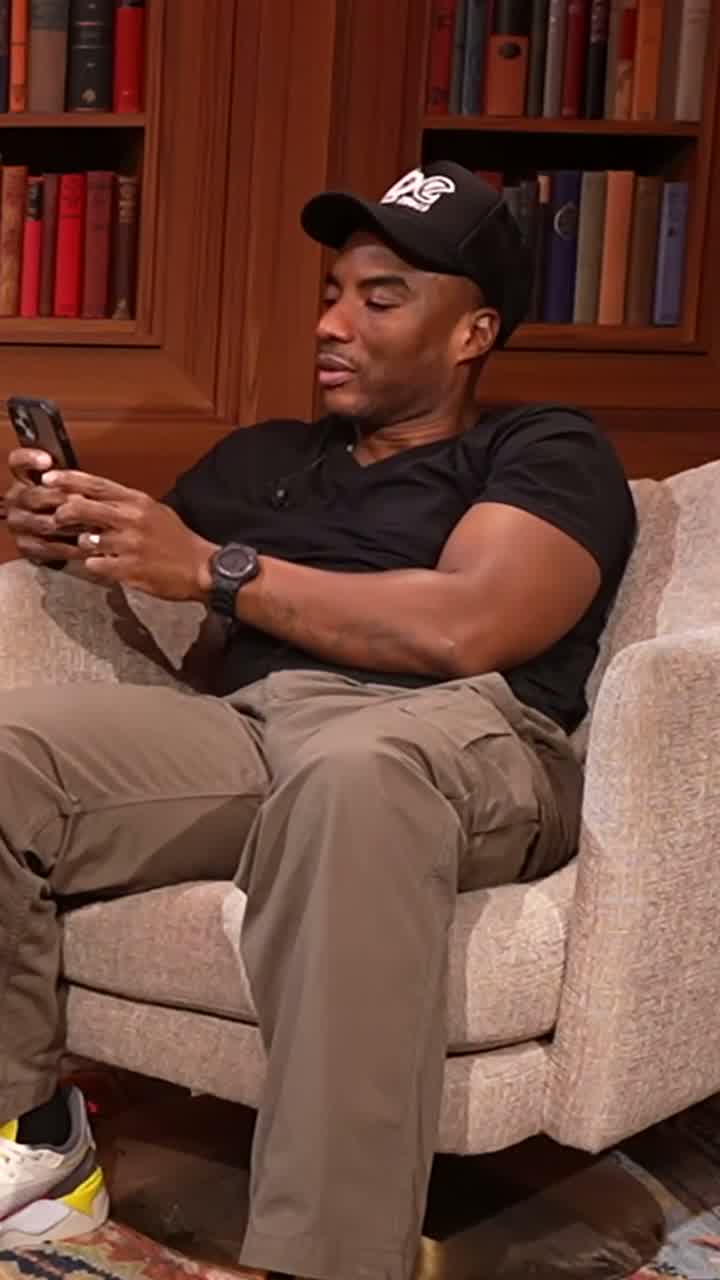
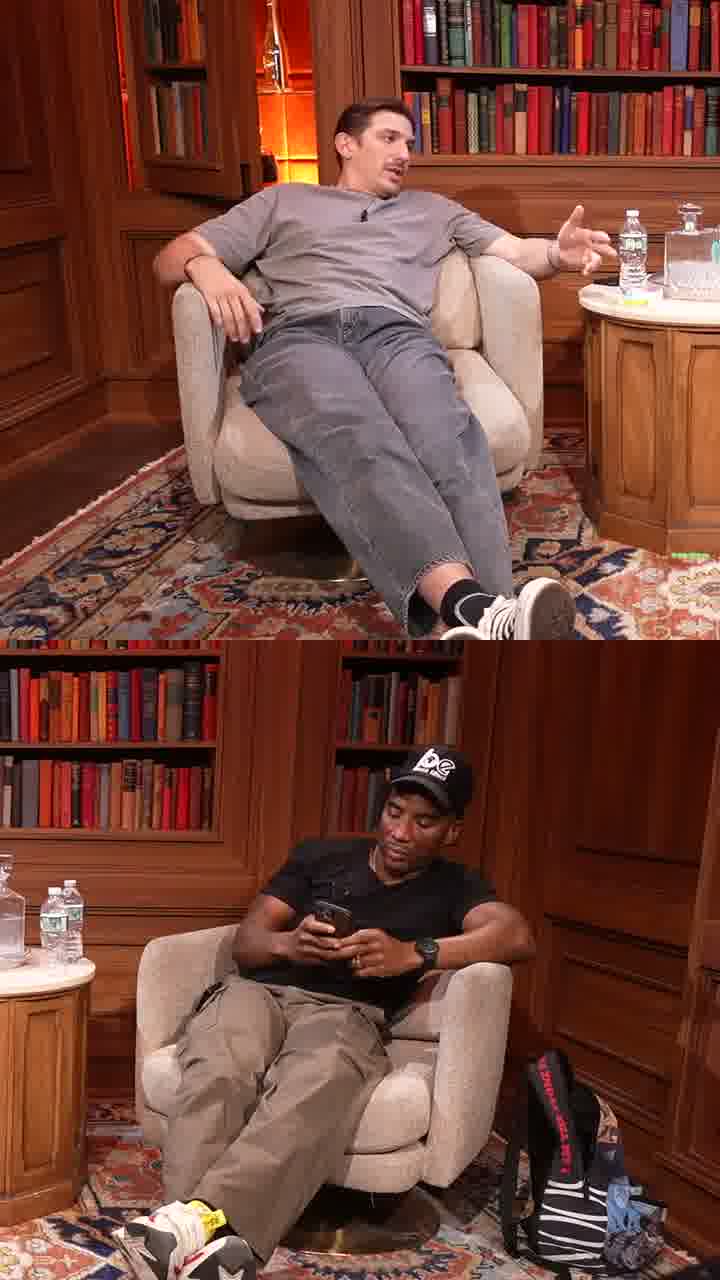
Podcast clip maker comparison table
| Tool | Paste a link | Moment selection | Two hosts talking | Captions | Free tier | Per 60-min episode, entry → best plan |
|---|---|---|---|---|---|---|
| ClipPod | YouTube link or upload | Picks the moments and tells you why for each | Automatic split, speaker top, captions on the seam | Word-timed, several styles, restyle any clip | 60 credits at signup, 30 a month; clips end with a short ClipPod card | $4.80 → $3.45 |
| OpusClip | YouTube, Drive, Vimeo, Zoom, Twitch and more, or upload | "ClipAnything", visual, audio and sentiment cues | Not stated | Auto captions, 25+ languages | Watermarked, 1080p, 3-day storage | $6.00 → $5.80 |
| Vizard | Upload shown; link support not stated | AI clipping, one-click cut | Tracks each person separately; no split layout named | Auto captions, 100+ languages | 720p with watermark, 10-min export cap | $2.90 |
| Klap | YouTube link or upload | "Best topics" into clips, about 5 clips per source minute | Split Screen is a selectable layout; automation not confirmed | Auto captions, 52 languages | No free plan on the pricing page | Per clip |
| Quso.ai | YouTube, Vimeo, Zoom, Drive, Dropbox and more, or upload | Moments scored by "virality" | Not stated | Word-level animated, 100+ languages | 75 credits a month at 720p | $17.40 → $4.90 |
| Submagic | Link or upload | "Magic Clips" key moments | Not stated | Strongest caption editor here, 123 languages | Trial only; paid tiers have no watermark | Per clip |
| Descript | Upload | "Create Clips" from the transcript | Automatic Multicam named; behaviour not described | One-click subtitles | Not stated | Editor pricing |
| Riverside | Records in-app; not a link clipper | "Magic Clips" | Auto-layouts change with who is speaking | Animated auto captions | Not stated | Studio pricing |
| Munch | Not stated | Not described; social scheduling first | Not stated | Not detailed | Not stated | $4.56 → $3.60 |
Per-episode cost is the monthly price divided by the 60-minute episodes the allowance covers, on the entry plan and on the tool's best-value monthly plan. ClipPod's best value is Studio at $69 for 1,200 minutes; OpusClip's is Pro at $29 for 300; Quso's is Growth at $49 for 600; Munch's is Premium at $60 for 1,000. Klap and Submagic bill per output clip. Vizard's $2.90 is at its $29 monthly list price; the $14.50 it advertises is the annual rate. Full working in what one episode costs.
The 9 best AI podcast clipping tools in 2026, reviewed
1. ClipPod
Best for two-host and guest podcastsFrom $12/mo for 150 episode minutes · $29 for 400 · $69 for 1,200 · 60 free credits at signup
Paste the YouTube link or drop the file. The clips come back framed for a phone, and when a second voice lands the frame splits, speaker on top and listener below. Captions sit on the seam between them. Solo moments stay tight on the speaker.
Each clip arrives with the reason it was picked, so you judge the selection in a glance rather than by watching every one. Here is how that split-screen frame is built.
Pros
- Only tool here that frames two speakers automatically
- Every clip found is included; downloads free and unlimited
- Unused credits bank up to three months; failed analysis refunds itself
- Reason shown for every clip
Cons
- Built for talk; not for gaming streams or slide lectures
- Free clips end with a short ClipPod card (paid plans remove it)
- Audio-only shows are out of scope; it needs the video
- No direct publishing yet; downloads and share links only
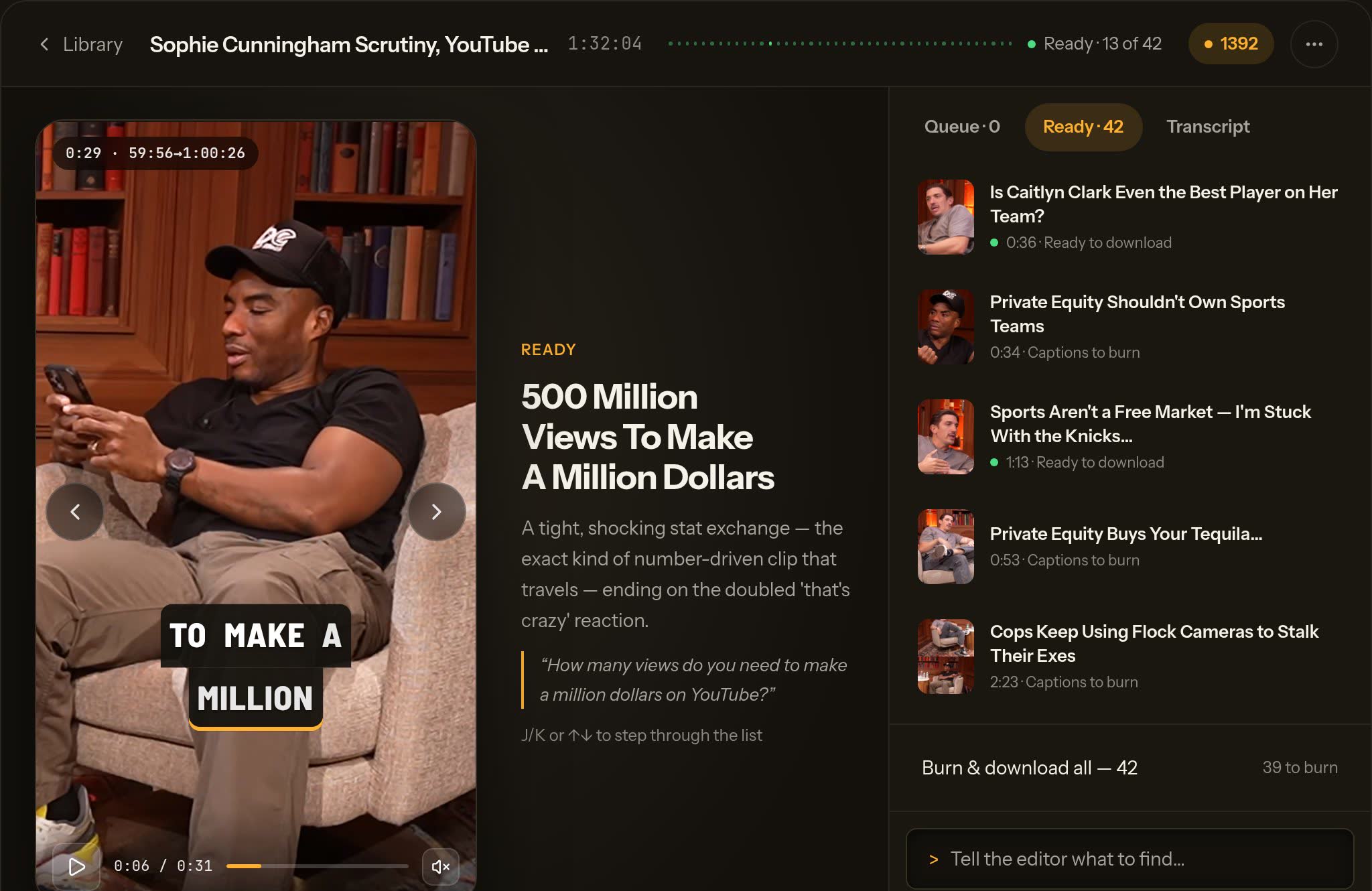
The selection is the part no screenshot proves, so here are three of the 42 reasons the picker wrote for that episode, verbatim:
- "A tight, shocking stat exchange - the exact kind of number-driven clip that travels - ending on the doubled 'that's crazy' reaction."
- "Genuine cross-speaker tension - 'Based on what? Skin color?' and the Kelsey Mitchell counterclaim make a spicy, debate-bait exchange."
- "A self-contained conspiracy-adjacent breakdown of the $12.5B Lakers sale ending on the mic-drop 'don't be surprised if that investigation just goes away.'"
Those are the notes an editor would leave. Whether you agree with them is the test, and it takes one episode to run. The first clips from that 92-minute episode were back 13 minutes after the link was pasted.
We make it, which is why this section describes rather than scores. The honest test is to run your own two-host episode through it on the free credits and look at who is in the frame during the back-and-forth. Pricing and the credit FAQ are here.
2. OpusClip
Best all-rounder for solo showsStarter $15/mo for 150 credits · Pro $29 for 300 · free tier watermarked · 1 credit = 1 source minute
The longest list of inputs in the category, from YouTube and Drive to Zoom, Twitch and Riverside recordings, and an API for teams. Its moment picker, ClipAnything, works across genres, not only talk, which makes it the safe default if you clip more than podcasts.
Pros
- Widest input and integration list
- Moment selection works on non-talk footage too
- Team workspace, brand templates, API
Cons
- No stated multi-speaker layout; a two-host show gets one crop following one person
- Monthly credits expire after 60 days
- Reframing is the most argued-about feature in reviews
A one-star Trustpilot review from September 2026 says its "AI Reframe often focuses on the wrong subject", while a five-star one from the same week praises support fixing a reported bug within two days. The $15 plan covers two and a half hour-long episodes, the $29 Pro plan five. OpusClip credits explained, plan by plan.
3. Vizard
Best for volume on a budgetCreator $29/mo for 600 minutes ($14.50 on annual billing) · free tier 720p, watermark, 10-min export cap
Vizard's Creator plan gives ten hour-long episodes a month at $2.90 each, the most minutes per dollar on this list; ClipPod's Studio plan at $69 for 1,200 comes next, then Munch Premium. The $14.50 it advertises is that same plan billed yearly, so read the toggle before you compare.
Pros
- 600 minutes for $29, cheapest per episode on monthly billing
- 4K export and no watermark on paid plans
- AI B-roll, direct publish, brand template
Cons
- Names no two-speaker layout, though it tracks each person separately
- Link import not stated on the homepage
- Free tier is 720p, watermarked, capped at ten-minute exports
Worth a trial if you record solo or interview-style and post in volume.
4. Klap
Best when you know your clip countBasic $14/mo billed yearly for 100 clips · no free plan on the pricing page · bills per clip, not per minute
If you post four clips a week, 100 clips a month is cheaper than any minute-metered plan. Its Reframe feature offers a Split Screen layout among its templates. Whether it decides to use it automatically when two people talk, or leaves that choice to you, the site does not say, so test it on a two-host episode first.
Pros
- Per-clip pricing suits a fixed posting schedule
- Split Screen exists as a layout option
- Scheduling to TikTok, YouTube, Instagram and LinkedIn built in
Cons
- A rich episode costs more, since every extra clip counts
- Only a yearly-billed price is published
- Automation of the split layout not confirmed
Per-clip billing changes the maths against every minute-metered plan here, worked through in what one episode costs on each tool.
5. Quso.ai
Best for publishing to many platformsLite $29/mo for 100 credits · Growth $49 for 600 · annual plans double the credits · free tier 75 credits at 720p
Quso takes links from more sources than almost anyone and publishes to six platforms with a brand kit and an AI B-roll library. Its Lite plan is the expensive way to process a podcast, though: $29 for 100 minutes is under two hour-long episodes, or $17.40 an episode. The Growth plan fixes that.
Pros
- Direct publishing to six platforms, brand kit lock
- Word-level animated captions in 100+ languages
- Annual billing doubles the credits
Cons
- Entry plan is $17.40 per hour-long episode
- No stated two-speaker handling
- Fits a social manager with many short sources better than a weekly hour
6. Submagic
Best captions editorStarter $19/mo for 15 output videos · no watermark on paid tiers · 2-minute cap per output
Submagic started as a caption tool and it shows. Reviewers consistently rate its word-level editing and timing above the rest, one August 2026 Trustpilot review calling it "WAY easier to adjust words". Magic Clips finds moments from links or uploads, and its AI Auto-Zoom handles reframing.
Pros
- Best caption editing and timing in the set
- 123 caption languages
- Hook generator, AI B-roll, scheduling
Cons
- Two-minute cap per output clip
- Bills per output video, so a rich episode costs more
- No stated two-speaker handling
7. Descript
Best if you edit the whole episode there anywayEditor subscription; clipping is one feature among many
Descript is an editor first. Create Clips works from the transcript, and it lists Automatic Multicam without describing how it chooses a speaker. If your workflow already lives in Descript, use the built-in clipping before paying for anything else. If it does not, it is a lot of software to adopt for the clips alone.
8. Riverside
Best for recording and clipping in one placeStudio subscription; clips come from recordings made inside Riverside
Riverside's auto-layouts change with who is speaking, which is the closest thing on this list to what ClipPod does. The catch is that it applies to recordings made inside Riverside, not to an episode you already have on YouTube. If you record there, its Magic Clips are the obvious first stop.
9. Munch, plus Async and Podsqueeze
Different jobsMunch Essential $38/mo for 500 minutes · Premium $60 for 1,000
Munch, now Munch Studio, has become a social media manager that also cuts video. Podcastle has rebranded to Async and positions itself as a general video maker with a clips feature. Podsqueeze works from the transcript to produce show notes, titles and audiograms, with clips as chapter exports. None of the three describes moment selection or two-speaker framing on its site. Worth knowing about, but not what a podcaster searching for a clip maker is looking for.
Which podcast clip maker should you choose?
Choose ClipPod if two hosts share the frame, OpusClip if you shoot solo from many sources, and Vizard if price per episode is the deciding factor.
- Choose ClipPod if your show has two hosts or a regular guest and you want the split handled without touching an editor, or if you want every clip from an episode included in one price.
- Choose OpusClip if you are one person on camera and you clip from many sources beyond podcasts, or your team needs the API and integrations.
- Choose Vizard if you post in volume, record solo or interview-style, and the per-episode price is the deciding factor.
- Choose Klap if you post a fixed number of clips a week and want scheduling built in.
- Choose Submagic if you already have your clips cut and captions are the thing you fight with.
- Choose Descript or Riverside if you already record or edit the full episode there. Their clipping is included and good enough to try first.
OpusClip alternatives for podcasts
The best OpusClip alternatives for podcasts are ClipPod for two-speaker framing, Vizard for the lowest cost per episode, and Riverside if you record there. Which one fits depends on which wall you hit: credits ran out on a long episode, the reframe followed the wrong person, or the free tier watermark.
- Credits ran out: Vizard gives 600 minutes for the same $29 as OpusClip Pro's 300, and ClipPod gives 400 with credits that bank for three months instead of expiring after 60 days. The full plan-by-plan maths is in OpusClip credits explained.
- Wrong person in the frame: ClipPod is the only tool here that frames two speakers automatically. Riverside does it for recordings made inside Riverside. See what the finished split looks like.
- Watermark on free clips: ClipPod's free tier puts a short card after the clip rather than a mark over it. Quso's free tier does not state a watermark but caps exports at 720p.
Vizard vs OpusClip for podcasts
Vizard is cheaper per episode and OpusClip takes more sources. Vizard's Creator plan is $29 a month for 600 minutes, which is $2.90 per hour-long episode; OpusClip Pro is $29 for 300 credits, or $5.80. OpusClip imports from YouTube, Drive, Zoom, Twitch and more, and Vizard does not state link import at all. Neither names a two-speaker layout, so on a two-host show the framing question is a draw.
| Vizard | OpusClip | |
|---|---|---|
| Entry plan, monthly | Creator $29 for 600 minutes ($14.50 annual) | Starter $15 for 150 credits |
| Per 60-min episode | $2.90 | $6.00 entry, $5.80 on Pro |
| Credit expiry | Rollover not stated | Monthly credits expire after 60 days |
| Inputs | Upload shown; link import not stated | YouTube, Drive, Vimeo, Zoom, Twitch, Riverside and more |
| Two hosts talking | Tracks each person separately; no split layout named | Not stated |
| Free tier | 60 credits a month, 720p, watermark, 10-min export cap | Watermark, 1080p, 3-day storage |
Pick Vizard on price, OpusClip on inputs, and neither if the two-host back-and-forth is the part of your show that travels, since ClipPod splits that frame automatically.
How to test a podcast clip generator on your own episode in an afternoon
Run the same episode through two or three free tiers and compare who ends up in frame and which clips you would have picked yourself.
- Pick one episode you know well, ideally with a stretch where both hosts go back and forth.
- Run it through the free tiers of ClipPod, OpusClip and one more from the list.
- Count how many of the top five clips you would have picked yourself. That is the selection score.
- Find the back-and-forth stretch in each tool's clips and look at who is in the frame.
- Watch one clip to the very end on each free tier to see what it stamps or appends.
- Multiply your episode length by your monthly count and check which plan covers it before you subscribe.
No tool replaces taste. Expect to keep three to six of every ten clips whatever you use, and judge a tool on how good those keepers are.
Podcast clip maker FAQ
- What is the best podcast clip maker for two hosts?
- ClipPod, because it splits the frame automatically when two people talk, speaker on top and listener below, with captions on the seam. Among the others, Riverside applies speaker-based layouts to its own recordings and Klap offers Split Screen as a selectable layout. OpusClip, Vizard, Quso and Submagic do not name a two-speaker layout. See how the split is built.
- What is the best free podcast clip maker?
- ClipPod: 60 credits at signup and 30 credits every month after, enough for one hour-long episode, with a short end card on free clips instead of a mark over the picture. OpusClip and Vizard have free tiers that watermark the picture. Quso gives 75 credits a month at 720p. Klap shows no free plan on its pricing page.
- What is the best AI podcast clip generator in 2026?
- For talk shows with more than one person on camera, ClipPod. For solo creators clipping from many sources, OpusClip. For the lowest cost per episode, Vizard at $2.90 an hour-long episode. Moment selection and captions differ tool by tool, so read the comparison table above before you pick.
- Vizard vs OpusClip: which is better for podcasts?
- Vizard is cheaper, at $2.90 per hour-long episode against $5.80 on OpusClip Pro. OpusClip accepts far more input sources and does not make you upload. Neither names a two-speaker layout, so for a two-host show price decides. The side-by-side table above has the full comparison.
- How much does it cost to clip a podcast episode with AI?
- Between $2.90 and $17.40 for a 60-minute episode, depending on the tool and plan. Vizard is $2.90, ClipPod is $4.80 on Starter and $3.45 on Studio, OpusClip is $6.00 on Starter, and Quso Lite is $17.40. Klap and Submagic bill per output clip instead. Full arithmetic here.
- Is there a podcast clip maker that works from a YouTube link?
- Yes. ClipPod, OpusClip, Klap, Quso and Submagic all take a link, so nothing has to be re-uploaded. OpusClip has the longest list, adding Drive, Vimeo, Zoom and Twitch. Vizard does not state link import. Descript works from uploads, and Riverside clips only its own recordings.
- Which podcast clip maker is best for a solo host?
- Two-speaker framing stops mattering, so the choice comes down to selection quality and price per episode. OpusClip, Vizard and ClipPod are the three to trial: run one episode through all three free tiers and compare the top five clips. The cost guide has the per-episode arithmetic.
- Can I post the clips directly from the tool?
- Klap, Quso, Submagic, Vizard and Riverside offer direct publishing or scheduling to platforms such as TikTok, YouTube and Instagram. ClipPod has no scheduler. It gives free unlimited downloads and a share page per clip, so posting happens wherever you already post.
- How long does it take to get clips from an episode?
- Most tools quote "minutes" without a number. On ClipPod, the 92-minute Brilliant Idiots episode in the screenshot above returned its first clips about 13 minutes after the link was pasted, and 42 clips in total. Longer episodes take longer, since every tool works through the whole runtime.
- What about clips from an audio-only podcast?
- Every tool here wants video. For audio-only shows, Podsqueeze's audiograms or a waveform template in a general editor are the route, and none of the framing questions in this guide apply. A static camera on the episode is enough to put these tools back in play.
Try the two-host test on ClipPod
- Paste a YouTube link; the clips come back framed, captioned and split when two people talk
- Every clip found is included; downloads are free and unlimited
- 60 free credits at signup, enough for one hour-long episode, no card needed
Plans from $12 a month. See pricing. Unused credits bank for three months. Failed analysis refunds itself.
- OpusClip: opus.pro, opus.pro/pricing, help.opus.pro. Reviews: trustpilot.com/review/opus.pro.
- Vizard: vizard.ai, vizard.ai/pricing (prices load client-side; list $29 / annual $14.50 confirmed against dated snapshots at creatorintelhq.com and ezugc.ai).
- Klap: klap.app, klap.app/pricing. Reviews: trustpilot.com/review/klap.app.
- Quso.ai: quso.ai, quso.ai/pricing.
- Submagic: submagic.co, submagic.co/pricing. Reviews: trustpilot.com/review/submagic.co.
- Descript: descript.com. Riverside: riverside.com. Munch: munchstudio.com/pricing. Async (formerly Podcastle): async.com. Podsqueeze: podsqueeze.com.
- ClipPod: clippod.app/pricing, clippod.app/terms.